Unlocking UK Entrepreneurship: A Comprehensive Legal Guide for Expats Starting a Business

Are you an expat with an entrepreneurial spirit, dreaming of launching your own venture in the United Kingdom? The UK, with its vibrant economy, strong legal framework, and global connectivity, offers an exciting landscape for international business owners. However, navigating the legal intricacies can be a labyrinth without proper guidance. This article will illuminate the essential legal requirements for expats embarking on their business journey in the UK, helping you lay a solid foundation for success.
Visa and Immigration Status: Your Gateway to UK Business
Before you even think about business plans, your legal right to reside and work in the UK is paramount. For expats, this often means securing the appropriate visa.
Dedicated Entrepreneur Visas
The UK government offers specific routes designed to attract innovative entrepreneurs:
- Innovator Visa: This visa is for experienced businesspeople seeking to set up an innovative business in the UK. Your business idea must be unique, viable, and scalable, and you’ll need endorsement from an approved body.
- Startup Visa: Aimed at new entrepreneurs, this visa is for those looking to set up an innovative business for the first time. It also requires endorsement from an approved body, often a university or business accelerator.
Other Visa Routes
Not all expats starting a business will use dedicated entrepreneur visas. You might already be in the UK on a different visa that permits self-employment or starting a business, such as:
- Spouse/Partner Visa: If your visa allows, you may be able to run a business.
- Skilled Worker Visa (with restrictions): While primarily for employment, some skilled worker routes might allow supplementary self-employment under specific conditions, though starting a full-fledged business might require a switch.
It is crucial to verify your current visa’s conditions or apply for the correct visa category before commencing any business activities. Operating without the correct immigration status can lead to severe penalties.

Choosing Your Business Structure: The Foundation of Your Enterprise
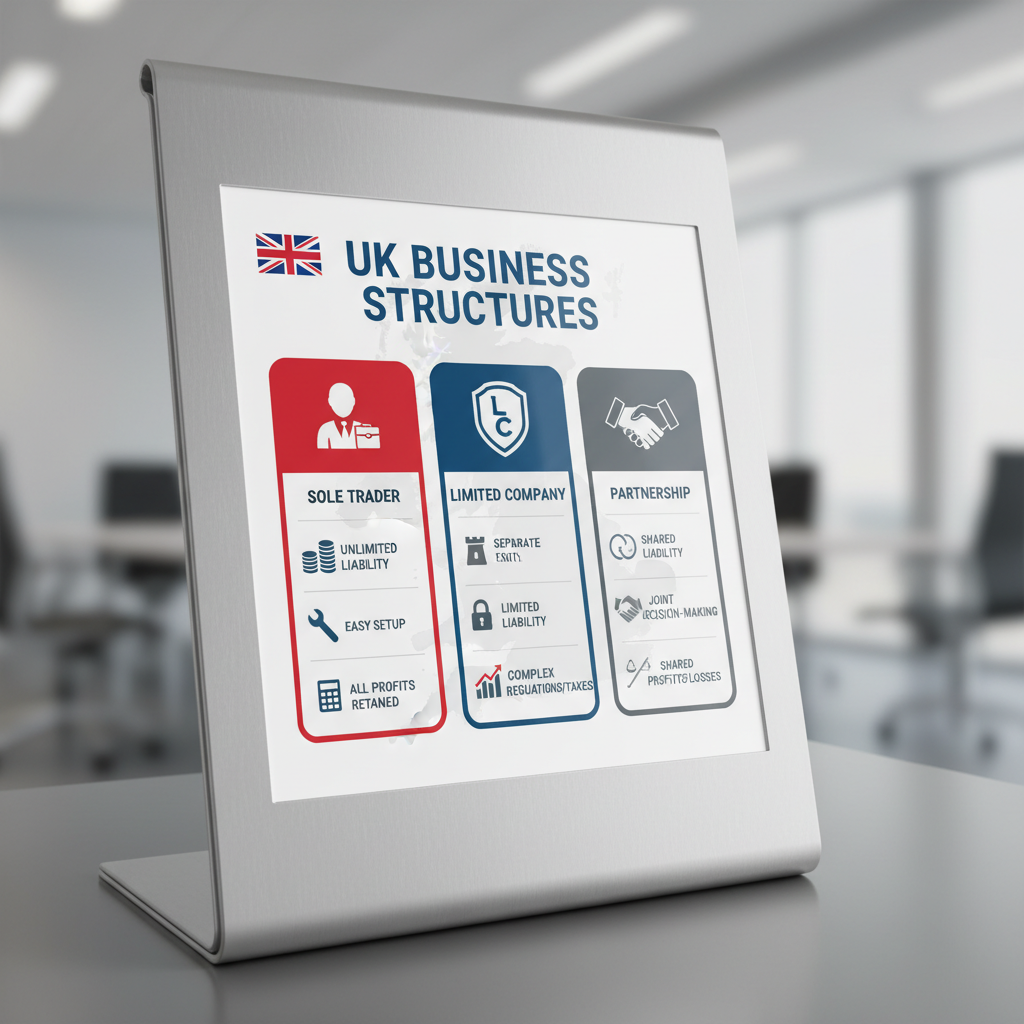
Selecting the right legal structure is a critical decision that impacts your liability, tax obligations, and administrative burden. The main options in the UK include:
Sole Trader
- Simplicity: Easiest to set up and maintain.
- Liability: You are personally responsible for all business debts, meaning your personal assets are at risk.
- Tax: You pay Income Tax on your profits and Class 2 and 4 National Insurance contributions.
Limited Company (Ltd)
- Separate Legal Entity: The company is legally distinct from its owners (shareholders) and managers (directors).
- Limited Liability: Your personal liability is generally limited to the amount you’ve invested in the company.
- Complexity: More complex to set up and administer, with stricter reporting requirements to Companies House and HMRC.
- Tax: The company pays Corporation Tax on its profits. As a director, you might pay yourself a salary (subject to PAYE) and/or dividends (subject to Dividend Tax).
Partnership
- Shared Ownership: Two or more individuals share ownership and responsibility for the business.
- Liability: In a ‘general partnership’, partners are personally liable for the partnership’s debts. A ‘Limited Liability Partnership’ (LLP) offers limited liability similar to a limited company but is typically for professional services.
Registering Your Business: Making it Official
Once you’ve chosen your structure, you need to make it legally official.
Companies House Registration
If you opt for a Limited Company or LLP, you must register it with Companies House. This involves providing details about the company’s name, registered office, directors, and shareholders.
HMRC Registration
All businesses, regardless of structure, must register with His Majesty’s Revenue and Customs (HMRC) for tax purposes:
- Self Assessment: As a sole trader or partner, you’ll need to register for Self Assessment to declare your income and pay tax.
- Corporation Tax: Limited companies must register for Corporation Tax.
- PAYE (Pay As You Earn): If you plan to employ staff (or pay yourself a salary as a director), you’ll need to register for PAYE to deduct tax and National Insurance contributions from salaries.
VAT Registration
If your business’s taxable turnover exceeds the VAT threshold (currently £90,000 for 2024/25), you must register for Value Added Tax (VAT). You can also register voluntarily if your turnover is below the threshold, which might be beneficial for certain businesses.
Essential Legal Compliance: Keeping Your Business on the Right Side of the Law
Beyond basic registration, several legal areas demand your attention.
Business Name Rules
The UK has rules on what you can and cannot name your business. Your name must not be offensive, too similar to an existing company, or imply a connection to government or royalty without permission.
Data Protection (GDPR)
If your business processes personal data (e.g., customer details, employee information), you must comply with the UK General Data Protection Regulation (UK GDPR) and the Data Protection Act 2018. This includes registering with the Information Commissioner’s Office (ICO).
Health and Safety
As an employer or business owner, you have a legal duty to protect the health and safety of your employees and others affected by your business activities. This involves conducting risk assessments and implementing safety measures.
Employment Law
If you plan to hire staff, you must adhere to UK employment law, covering aspects like contracts, minimum wage, working hours, discrimination, and unfair dismissal. This is a complex area, and professional advice is highly recommended.
Intellectual Property
Protecting your brand, inventions, designs, or creative works through trademarks, patents, or copyrights is vital for your business’s long-term success.
Business Insurance
While not always legally mandated (except for Employers’ Liability Insurance if you have staff), various business insurance policies (e.g., public liability, professional indemnity) are crucial for mitigating risks and protecting your assets.
Banking and Finance: Securing Your Operations
Opening a Business Bank Account
It is strongly advised to keep your personal and business finances separate by opening a dedicated business bank account. Many UK banks offer services tailored to new businesses and expats, but be prepared for identity verification checks.
Accessing Funding
While personal savings or external investment are common, some government schemes and private lenders offer funding options. Eligibility criteria often depend on your business plan, credit history, and immigration status.
Seek Professional Guidance
Starting a business as an expat in the UK is an exciting venture, but the legal landscape can be intricate. While this guide provides a comprehensive overview, it is not a substitute for professional advice. Consulting with immigration lawyers, business solicitors, accountants, and financial advisors specialising in expat businesses is highly recommended. They can offer tailored guidance, ensure full compliance, and help you navigate the journey smoothly, allowing you to focus on building your dream business in the UK.